

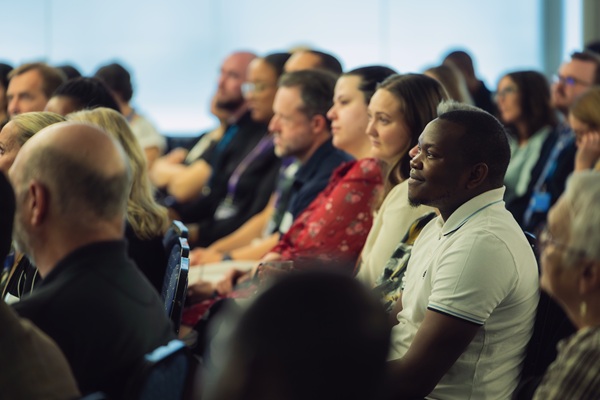
The event brought together Council colleagues, researchers, VCFSE organisations, residents, and national leaders to look back, reflect, share experiences, celebrate achievements, and look ahead.
From the moment guests arrived, the atmosphere felt warm, bright, and welcoming. Conversations flowed easily around the room as people reconnected, met new collaborators, and exchanged ideas. There was a strong sense of community throughout the day, with thoughtful discussions alongside laughter, optimism, and a shared commitment to improving health and wellbeing across Coventry.
Sharing stories through research
Before the first presentations began, attendees explored a series of research posters showcasing projects from across NIHR HDRC Coventry and its partners.
The posters offered an immediate sense of the work taking place across the city. They highlighted projects focused on active travel, green spaces, homelessness, public involvement, community engagement, and tackling health inequalities. They told stories about the people behind the research and the partnerships making the work possible.
The exhibition set the tone for the day. It demonstrated how research is becoming increasingly embedded in everyday practice and how evidence is helping shape decisions that affect communities across Coventry.
Looking back: 4 years of progress
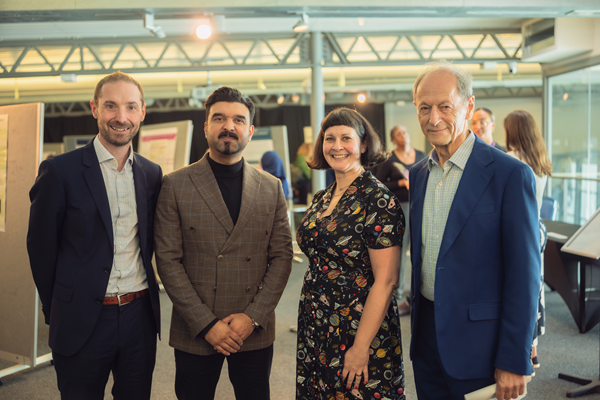
Opening the event, NIHR HDRC Coventry Director Valerie De Souza reflected on the collaboration's growth and the increasing role of research within the city. From embedded researchers and evidence cafés to the continued success of the "So What?" Club, the message was clear: research is becoming part of how Coventry works.
That commitment was echoed by Councillor Kamran Caan, who welcomed delegates and reflected on Coventry's long-standing leadership in tackling health inequalities.
He described public health as a "contact sport", highlighting the importance of working across organisations, sectors, and communities to improve outcomes for local people. His message reinforced a theme that would emerge repeatedly throughout the day: meaningful change happens when people work together.
Coventry's role as a Marmot place
Few people are better placed to reflect on Coventry's journey than Professor Sir Michael Marmot.
Looking back to the publication of the original Marmot Review in 2010, he reflected on how Coventry embraced the Marmot principles and became the UK's first Marmot City. He also spoke candidly about the national challenges that have followed, including widening inequalities and the impact of austerity on communities across the country.
Despite those challenges, his message remained hopeful. Coventry's example has inspired other places to follow suit, helping to demonstrate what can be achieved through local action.
As Professor Sir Michael Marmot told attendees:
"The more action on local level, and we do need national action, the greater the chance to improve things for everybody."
He stressed that building healthier communities requires action on the social determinants of health, including housing, education, transport, and employment, while highlighting the increasingly important role NIHR HDRCs play in generating the evidence needed to support that work.
Reflection and change
The connection between research and real-world action was a recurring thread throughout the event.
Professor Adam Briggs, Director of the NIHR Public Health Research Programme, spoke about the growing recognition of place-based approaches to improving health and reducing inequalities.
Having visited numerous NIHR HDRCs across the country, he praised Coventry's progress and its commitment to embedding research into everyday decision-making.
Professor Adam Briggs described the approach as:
"A lens through which you can really shape change and bring people together."
Reflecting on the event itself, he said:
" (...) Spending the day here with the NIHR HDRC Coventry at their annual event and there's been some really clear takeaways. The first thing is, undeniably, the enthusiasm and the buzz in the room and around the conference. It is absolutely tangible."
He added:
"It's really helping to demonstrate, and for me kind of clarifying, how the HDRC investments are making the difference not only to research generation but also using that research to inform decision-making that can lead to better outcomes for health and inequalities."
His challenge to the sector was simple:
"Shout about what works, and tell us what doesn't."
For Coventry, that means continuing to share learning, test new approaches, and help shape the future of public health research nationally.
Research is part of what we do
One of the strongest messages of the day came from the people actively using research in their communities, services, and organisations.
Introducing a series of lightning talks, John Wilcox, Head of NIHR HDRC Coventry, spoke about the growing Research Ambassador programme and the culture shift taking place across Coventry.
As John Wilcox put it:
"Addressing inequalities is already part of the Coventry Marmot approach, and we are helping to make using and doing research to be part of what we do as well."
The presentations that followed showed exactly what that looks like in practice.
Research Ambassador Corinne Muir shared work exploring access to green spaces and the barriers that prevent some people from using them. Her work highlighted practical issues, as well as questions around belonging and inclusion.
Turning lived experience into action
Many of the day's most powerful stories came from community members and voluntary sector organisations.
Connor Morgan, Public Voice Group member and Coventry resident, reflected on his own journey into research and community involvement, describing how increased awareness and understanding had enabled him to contribute to change in Coventry.
Research Ambassador and Public Voice Group member John Mpaso, spoke about improving access to healthcare for migrant communities. His presentation highlighted the importance of understanding communities in all their diversity and avoiding assumptions about people's experiences based solely on nationality or background.
Meanwhile, community organisations shared how research is helping them strengthen services and secure funding while responding to growing demand.
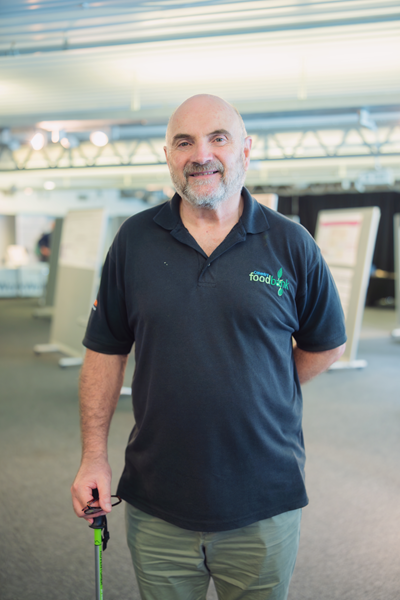
Speaking about the impact of collaborative research, Steve Crump from Feed the Hungry said:
"We know that coming to a food bank is really a symptom of a wider determinants of health and as a result of being engaged with my mentor from Coventry University and the network within NIHR HDRC Coventry we've realised that the wider determinants of health are even probably wider than we imagined ourselves.."
He added:
"People are having conversations now about how (...) we can use data (...) and challenge some of our assumptions to see how we could get better solutions for our clients (...)."
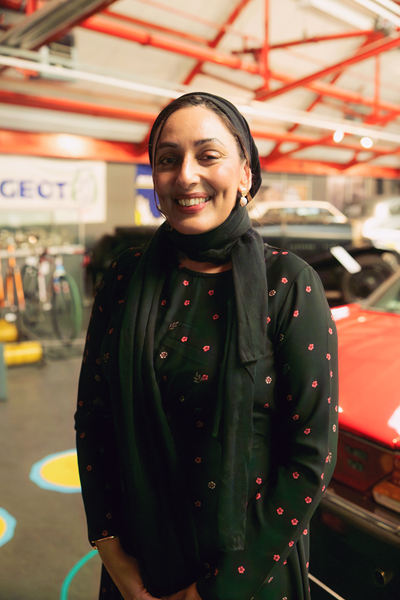
Reflecting on the partnership between NIHR HDRC Coventry and the VCFSE sector, Noreen Bukhari from Foleshill Women's Training, said:
"It's been a fantastic journey for us over the last few years and there's been such fantastic development and achievement by the NIHR HDRC Coventry and we've been really pleased to be part of it."
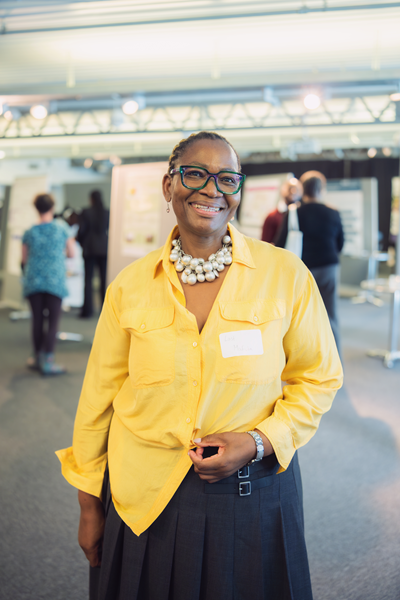
Last Mafuba, from Inini Initiative Ltd, captured the spirit of co-production that has become central to NIHR HDRC Coventry's approach:
"We wanted to make sure that when research is being done, it is not done to communities, but with communities."
She added:
"We share the power. We are not dominated upon."
Looking ahead and continuing the conversation
The Year 4 Celebration Event offered an opportunity to look back on how far NIHR HDRC Coventry has come, reflect on where it is today, and look ahead to the next stage of the journey.
The discussion also reinforced the importance of continuing to share learning nationally. As health systems evolve and place-based approaches gain momentum, Coventry is increasingly recognised as a city that can help show what works, why it works, and how others might learn from it.
Research in Coventry is becoming part of everyday conversations, everyday decisions and everyday work. And that story is still being written.
View photos, highlights, and posters from the event on Padlet: HDRC Coventry Year 4 Celebration Event.